The M’Goun Summit Trek is one of Morocco’s best-kept trekking secrets, and that’s exactly why serious hikers seek it out. At 4,071 meters, Jebel M’Goun is the second-highest peak in the country, and unlike its famous neighbor Toubkal, you won’t share the trail with crowds. This 7-day route starts in Marrakech, winds through the Aït Bouguemez Valley — locally known as the “Happy Valley” — and climbs through Berber villages, walnut groves, and high alpine passes before reaching the summit.
This guide covers the full day-by-day itinerary, what fitness level you’ll need, when to go, and what to pack, based on routes actually run in the Central High Atlas.
Why Choose the M’Goun Summit Trek Over Toubkal
Most first-time Morocco trekkers default to Mount Toubkal because it’s the highest peak in North Africa. But Toubkal’s popularity means busy refuges, crowded summit mornings, and a trail that can feel more like a queue than a wilderness experience.
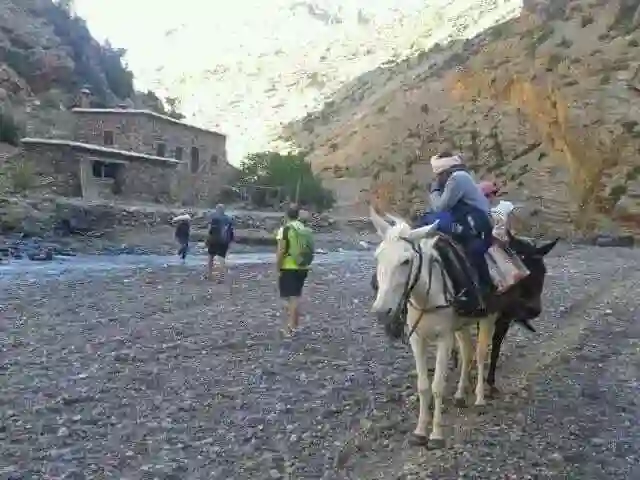
The M’Goun Summit Trek offers a different kind of reward. You’ll trek through the Aït Bouguemez Valley, one of the most fertile and traditional valleys in the High Atlas, past mud-brick villages, irrigated terraces, and communities that still move by mule. Days here feel remote in a way Toubkal rarely does anymore. If you want genuine High Atlas trekking rather than a checklist peak, M’Goun is the better trip.
7-Day M’Goun Summit Trek Itinerary
Day 1: Marrakech to Aït Bouguemez Valley
A scenic drive over the Tizi n’Tichka pass brings you into the Happy Valley by afternoon. Overnight in a guesthouse, with time to settle in and meet your guide and mule team.
Day 2: Aït Bouguemez to Takasift or Ikkis
The trek begins with a gentle walk through Berber villages, poplar groves, and terraced fields. Around 4-5 hours of walking, gaining altitude gradually — ideal for acclimatization before the harder days ahead.
Day 3: Ascent Toward Tarkeddit Plateau
A longer day, roughly 6-7 hours, climbing steadily onto open plateau terrain around 3,000 meters. Camp is set up by the mule team, with views back across the valley you left behind.
Day 4: Tarkeddit to M’Goun Base Camp
Shorter walking day (4-5 hours) to preserve energy for summit day. This is where altitude starts to matter — a slow pace here pays off tomorrow.
Day 5: Summit Day — Jebel M’Goun (4,071m)
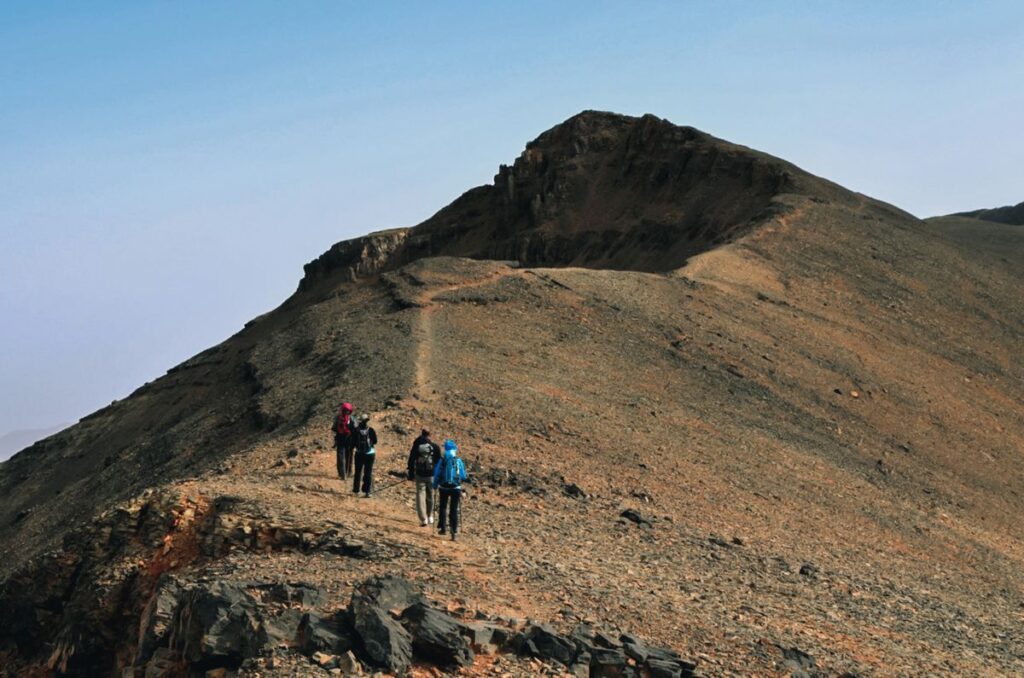
An early start, typically 4-6 hours to the summit depending on conditions, followed by the descent back to camp. The summit ridge offers panoramic views across the entire Central High Atlas and, on clear days, toward the Sahara’s edge.
Day 6: Descent Through the Gorges
The trek drops back down through dramatic gorge terrain, a sharp contrast to the open plateau of the days before. Overnight in a village or camp near the valley floor.
Day 7: Return to Marrakech
A final short walk out to the trailhead, followed by the drive back to Marrakech, arriving in the evening.
Fitness Level and Trek Difficulty
The M’Goun Summit Trek is graded moderate to challenging. You don’t need technical climbing experience, but you do need solid cardiovascular fitness and multi-day hiking stamina. Summit day involves sustained ascent at altitude, and several other days run 6+ hours on foot. Anyone training for this trek should build up long hikes with a daypack in the months before departure.
Best Time to Trek M’Goun
The trekking season for the Aït Bouguemez Valley and M’Goun massif runs from May through October. Snow lingers on the higher passes outside this window, and river crossings can become dangerous with spring meltwater. Late May to June and September are often the sweet spot — warm days, cooler nights, and fewer other groups on the trail.
What to Pack for the M’Goun Trek
- Layered clothing (cold nights even in summer)
- Sturdy, broken-in hiking boots
- A warm sleeping bag rated for near-freezing temperatures
- Sun protection — hat, sunglasses, high-SPF sunscreen
- A headlamp for the early summit start
- Basic first aid and blister care
FAQ — Frequently Asked Questions
Is the M’Goun Summit Trek harder than Toubkal?
It’s comparable in physical demand but longer overall, with more days at altitude and a remoter feel. Toubkal can be done in 2-3 days; M’Goun typically takes a full week.
Do I need a guide for the M’Goun trek?
Yes. The terrain is remote, trail markers are minimal, and a local guide with mule support handles navigation, camping logistics, and safety.
How high is Jebel M’Goun?
4,071 meters, making it the second-highest peak in Morocco after Toubkal (4,167m).
What’s the Aït Bouguemez Valley known for?
It’s called the “Happy Valley” for its lush, fertile landscape and traditional Berber villages, largely unchanged by mass tourism.
Can beginners do this trek?
Beginners with good general fitness and some hiking experience can manage it with a guided group and a sensible pace, but it’s not recommended as a first multi-day trek.
Ready to Trek M’Goun?
The M’Goun Summit Trek rewards the effort with some of the quietest, most authentic trekking terrain in the High Atlas. If you’re ready to swap crowded trails for real Berber valleys and a genuine summit challenge, get in touch to book your 7-day M’Goun itinerary from Marrakech.