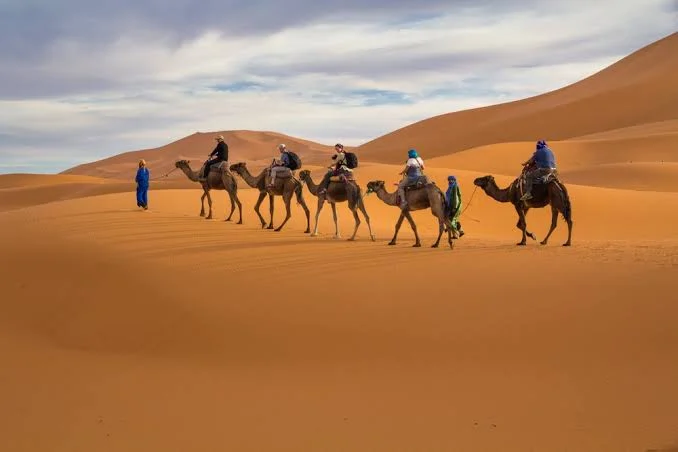
Few experiences capture the Sahara like crossing the dunes at sunset on camelback. The slow sway of the animal, the soft sound of footsteps on sand, and the glow of the light on the ridges make camel trekking the most memorable part of many Moroccan trips. It’s also easier than people expect, but a little preparation makes the ride far more comfortable.
At Morocco Desert Gateway, our camel treks are led by Berber guides who have grown up around these animals and these dunes. Below you’ll find where to go, what the ride is really like, and seven practical tips to help you enjoy it.
What Is Camel Trekking in Morocco?
Camel trekking is a guided ride across desert terrain, usually ending at a camp in the dunes. The animals used in Morocco are dromedaries, single-humped camels well suited to sand and heat. A typical ride lasts between one and two hours, though longer treks lasting several days are also possible. Most travelers do a short sunset trek into camp and return at sunrise, but multi-day routes exist for those who want a deeper desert experience.
Where to Go for Camel Trekking in Morocco
Merzouga and Erg Chebbi
The most popular place for a Merzouga camel trek. The high orange dunes make for dramatic scenery, and camps are easy to reach, so it’s ideal for first-time riders.
Zagora and the Draa Valley
Closer to Marrakech, with smaller dunes and a quieter atmosphere. Good for travelers who want a shorter overall trip.
Erg Chigaga near M’Hamid
A wilder, more remote option. Camel trekking here feels more like an expedition, with fewer visitors and larger dune fields.
7 Tips for Camel Trekking in Morocco
1. Dress Appropriately
Wear loose, comfortable trousers that cover your legs, closed shoes, and a headscarf or buff to protect against sun and dust. Avoid shorts, since the saddle can rub bare skin.
2. Hold On During Mounting
The camel stands up back legs first, which causes a sudden forward lurch. Hold the saddle handle firmly and lean back as the animal rises, then lean forward as it straightens its front legs.
3. Stay Relaxed on the Ride
Camels move with a slow, rolling gait. Sit upright, relax your hips, and let your body move with the rhythm. Tensing up makes the ride more tiring.
4. Choose Sunset or Sunrise
Midday heat can be intense, so most trips take place at sunset or early morning when temperatures are mild and the light is best for photos.
5. Pack Light for the Ride
Carry only essentials such as a camera, water, and a warm layer. Larger bags are usually transported separately by vehicle to the camp.
6. Respect the Animals
Choose operators who treat their camels well, provide enough water and rest, and avoid overloading the animals. Ask about animal care if you’re unsure.
7. Bring a Warm Layer for the Evening
Desert temperatures drop quickly after sunset, even when the days are hot. A fleece or jacket makes the camp evening far more comfortable.
What to Expect During a Sahara Camel Ride
Most rides start at the edge of the dunes, where you meet your camel and guide. The group moves in a line, led by a handler on foot, and the pace is slow and steady. Along the way you’ll stop for photos and to take in the views. Arrival at camp usually coincides with sunset, followed by tea, dinner, and music around the fire. At sunrise, many travelers climb a dune or take a short ride back.
Overnight Camel Trek vs. Short Ride
A short ride of one to two hours is enough for most travelers and gives you a real taste of the experience. An overnight camel trek goes further into the dunes, often with a quieter camp and a more traditional atmosphere. Multi-day treks, which can last several days, suit travelers who want to move deeper into the desert and have time to spare.
Best Time for Camel Trekking
- October to April: The most comfortable season, with warm days and cold nights.
- May and September: Hot during the day, but manageable at sunrise and sunset.
- June to August: Very hot, so rides are best limited to early morning or evening.
What to Pack
- A headscarf or buff and sunglasses
- Loose, comfortable clothing and closed shoes
- A warm layer for the camp evening
- Sunscreen and a refillable water bottle
- A small camera or phone with a secure strap
Frequently Asked Questions
Is camel trekking difficult?
No. Most people with average fitness find it easy, though the first few minutes can feel unusual.
How long is a typical camel trek?
Most rides last one to two hours, though multi-day treks are also available.
Is camel trekking safe for children?
Yes, with supervision. Many operators offer calm animals and shorter rides suited to families.
Will I be sore afterward?
Some travelers feel mild soreness in the legs or hips after a long ride, especially if they’re not used to riding.
Can I go camel trekking without staying overnight?
Yes, short rides are available, though an overnight stay lets you enjoy the sunrise and stars.
Conclusion
Camel trekking is one of the simplest and most rewarding ways to experience the Sahara. Choose a route that fits your time, dress sensibly, and travel with guides who care for their animals and know the dunes well. The slow pace and the changing light make it an experience that stays with you long after the ride ends.
Call To Action
Ready to ride into the dunes? Contact Morocco Desert Gateway to book your camel trekking experience with experienced Berber guides.